We measure ourselves in outcomes, not adjectives. Three regional firsts, each dated and verifiable, the ballast beneath every promise we make.
It is only the name we give to what has not yet been achieved.
Each of those dates was, in its time, a reason for laughter. Each required an instrument equal to the question. Our era is no different, only faster. And the instrument, now, is accelerated computing.
Leading-edge transistors are now measured in handfuls of silicon atoms, the angstrom scale, one tenth of a billionth of a meter. We work at the frontier where engineering touches the limit of what matter allows. From it we draw the tools we deliver to the discovery scientist.
The first academic software-defined data center (SDDC) in Latin America, infrastructure defined and orchestrated in software, built for research workloads.
The first academic 400G coherent-optics metropolitan network in Latin America, the optical fabric that interconnects research sites at the speed of light.
The first CUDA Quantum benchmark on GPUs in Brazil, hybrid classical-quantum computation validated on accelerated hardware.
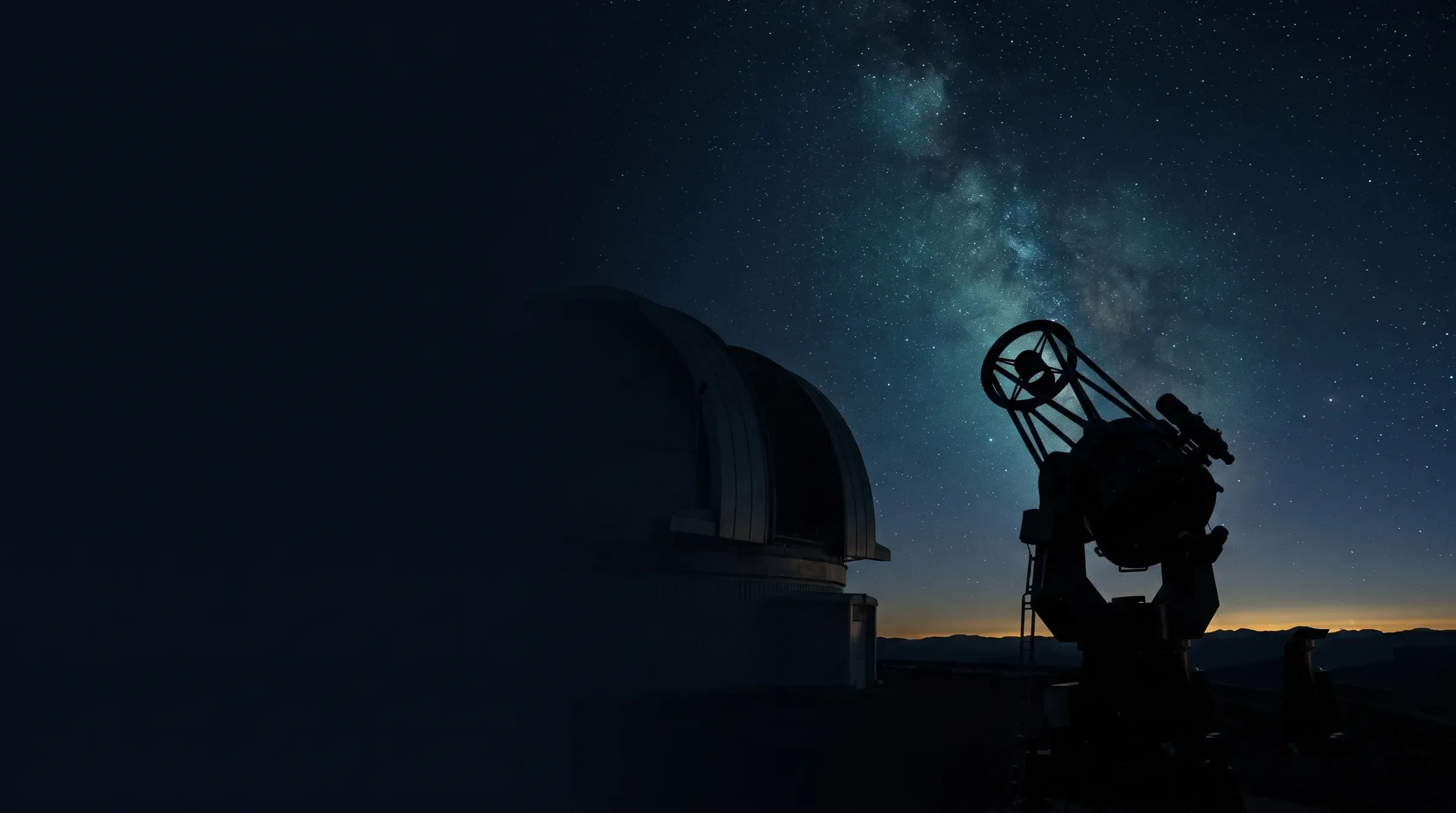
The same architecture that measures the cosmos models the molecule. Our proofs span the full scientific range, physics, networks and quantum, because discovery does not respect disciplinary borders.
The same curiosity that let Vera Rubin weigh the dark matter holding galaxies together, and Rosalind Franklin read the structure of life in a diffraction image, is the curiosity we accelerate, from the photon that carries the data to the exascale that resolves it.
Accelerated computing for high-energy physics, astronomy and simulation at scale.
Coherent optics and metro fabric that turn distant sites into one instrument.
CUDA Quantum on GPUs, the horizon already validated on the bench.